
Daybook vs. Cashbook vs. General Ledger: A Complete Guide for Traders and Retailers
Demystifying essential financial registers so you can track sales, expenses, and balances like a seasoned chief financial officer.
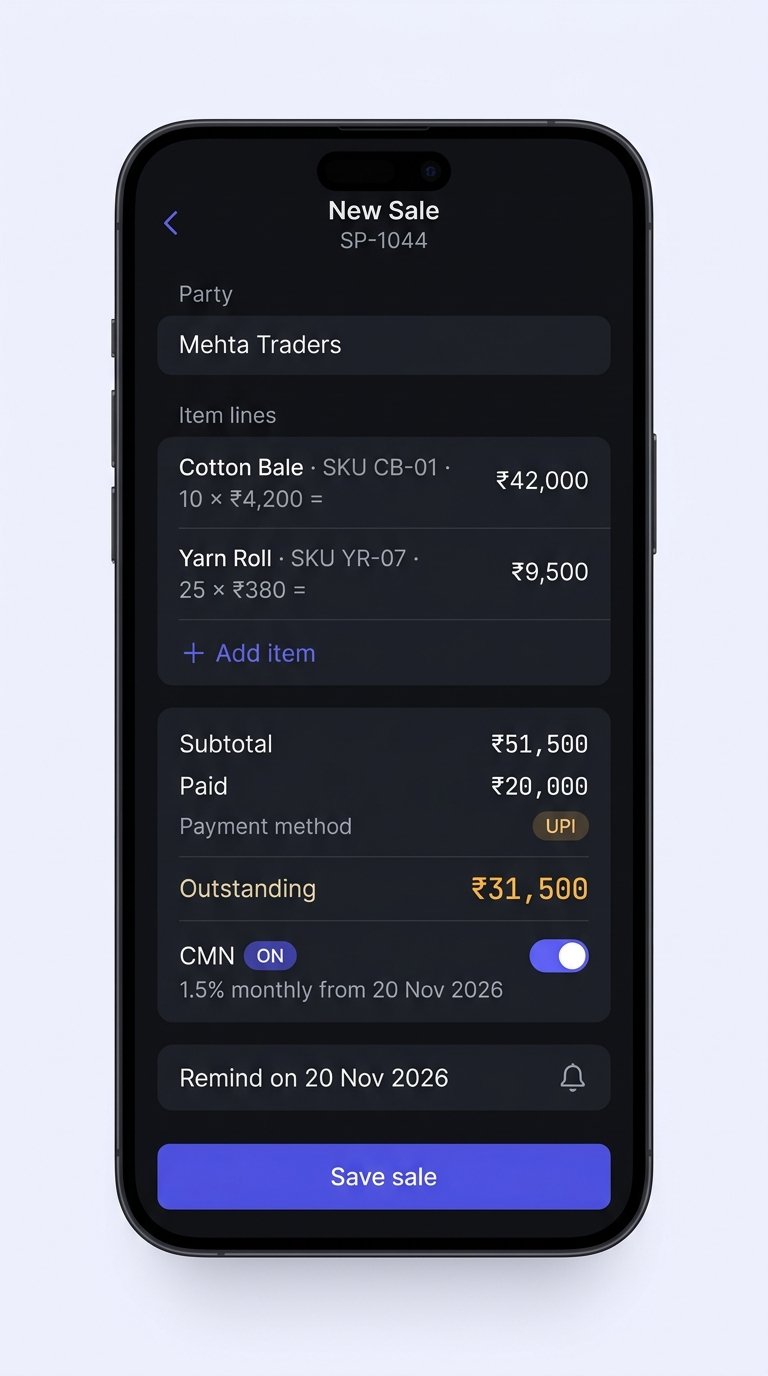
Many shop owners confuse daybooks, cashbooks, and ledgers. Understanding their unique roles gives you clear visibility into daily profits, liquid cash, and customer debt.
Demystifying Bookkeeping Jargon
Most business owners start their venture to build great products, delight customers, and build wealth—not to spend hours struggling with double-entry accounting textbooks. However, running a business without understanding your books is like flying an airplane without instruments.
Here is the plain-English breakdown of the three core registers every business owner must understand:
1. The Daybook: Your Real-Time Business Diary
The Daybook is a chronological journal of every single financial activity that happens during a specific business day. It doesn't matter whether the transaction was cash, credit, bank transfer, or an expense—if money changed hands or a promise of payment was made, it enters the Daybook.
PrimeBook Advantage: PrimeBook's Daybook assigns clean, sequential S.No tracking to every daily entry. You can filter by any specific calendar day to see the exact opening balance, total inflows, total outflows, and net closing balance.
2. The Cashbook: Monitoring Pure Liquid Cash
The Cashbook records only physical currency and direct bank liquidity moving in and out of your hands. Unlike the Daybook, it excludes credit transactions until cash is actually collected.
Key function: Verifying that the actual cash notes and bank balance at the end of the shift match the theoretical closing balance.
3. The General Ledger (Khata): Party-Wise Accounts
While the Daybook is organized by time, the Ledger is organized by entity (a specific customer, distributor, or expense category). Opening a customer's ledger allows you to see every purchase they made over the last 12 months, every payment received, and their exact outstanding liability.
How PrimeBook Unifies All Three into One Tap
Historically, maintaining these three books required three separate heavy bound registers and hours of manual cross-referencing. When you made a credit sale, you had to write it in the Sales Daybook, and then manually transfer it to the Customer Ledger.
With PrimeBook, you make one single entry:
- The entry immediately records in the customer's individual Ledger.
- It automatically posts to today's Daybook with S.No.
- If settled in cash or online, it reconciles with your Cashbook totals.
- Your overall dashboard Net Financial Position updates instantly.
Zero duplication, zero transcription errors, and 100% financial clarity.
Experience PrimeBook in Your Business
Get 100% offline-first accounting, WhatsApp reminders, and biometric security with our 30-day money-back guarantee.
Related Accounting Guides
The Ultimate Guide to Digital Ledgers: Why 50,000+ Modern Businesses are Retiring Paper Khatas in 2026
How transitioning from traditional red bahi-khatas to digital ledger apps like PrimeBook cuts accounting errors by 98% and accelerates cash flow.
Payment RecoveryHow to Collect Outstanding Payments 3x Faster Using Automated WhatsApp Payment Reminders
The psychological strategy and step-by-step framework to recover overdue customer credit without ruining client relationships.